
- What You’ll Learn
- 1. The Best Time to See the Northern Lights
- 1.1 The Best Time of the Year to See the Northern Lights
- 1.2 How Far in Advance Can You Predict the Northern Lights?
- 1.3 The Best Months to See the Northern Lights
- 1.4 The Best Time of Night to See the Northern Lights
- 1.5 Moon Phases and the Northern Lights
- 1.6 Weather and Cloud Cover
- 1.7 How the Best Time Varies by Destination
- 2. 10 Best Places in the World to See the Northern Lights
- 1. The Best Time to See the Northern Lights
- 3. The Best Locations to Photograph the Northern Lights
- Conclusion
Seeing the Northern Lights is an experience that is difficult to forget. When the lights begin to appear across the night sky, dancing above mountains, forests, lakes and Arctic coastlines, it is easy to understand why so many people dream of witnessing this spectacular natural phenomenon at least once in their lifetime.
But when is the best time to see the Northern Lights? And, perhaps even more importantly, where are the best places in the world to experience them?
The answer is not as simple as it might seem. The Aurora Borealis can be visible across large areas of the Northern Hemisphere throughout much of the dark season, but your chances of seeing it depend on several factors: the time of year, the number of hours of darkness, auroral activity, your geographical location and, of course, the weather and cloud conditions.
In this guide, we will look at the best time to see the Northern Lights and explore some of the best destinations around the world for experiencing them. We will cover the most suitable months, the best time of night, the importance of darkness, Moon phases and weather conditions.
We will then explore 10 of the best places in the world to see the Northern Lights, from the Arctic regions of Scandinavia and Iceland to Alaska, Canada and other northern destinations.
Finally, we will also look at Northern Lights photography, because seeing the Aurora and photographing it are two very different experiences. A location that offers excellent chances of witnessing the Northern Lights is not necessarily the place where you can create the most compelling photographs.
If you are simply looking for the best time and place to see the Northern Lights, this guide will help you understand when and where to go to increase your chances of experiencing this extraordinary natural phenomenon.
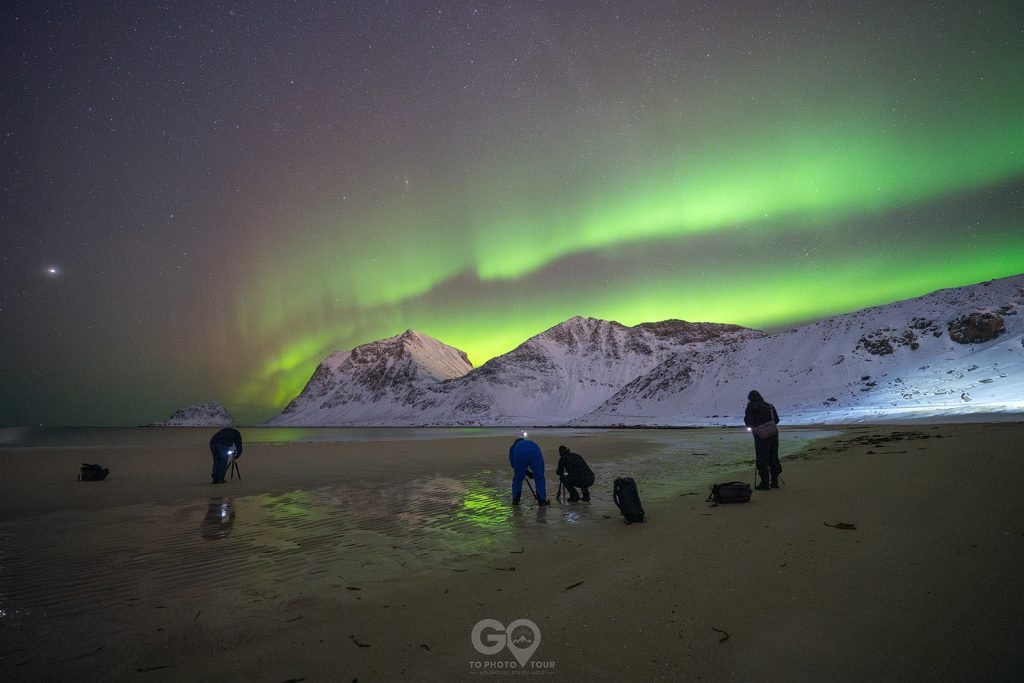
What You’ll Learn
- The Best Time to See the Northern Lights
- 10 Best Places in the World to See the Northern Lights
- The Best Location to Photograph the Northern Lights
1. The Best Time to See the Northern Lights
There is no single best month to see the Northern Lights. The Aurora can occur at any time of the year, even during the summer months, but it is only visible when the sky is dark enough. In the Arctic summer, long daylight hours and the Midnight Sun make the Aurora impossible to see with the naked eye.
The time of year is therefore important, but it is only one part of the equation. The number of hours of darkness, the time of night, weather and cloud cover, the Moon and the level of solar and geomagnetic activity can all influence your chances of seeing the Aurora.
Understanding how these factors work together can help you choose the right time for your trip and make the most of your time in the North.
1.1 The Best Time of the Year to See the Northern Lights
In general, the Northern Lights season runs from late August or early September until March or April, depending on the destination. During the summer months, the far northern regions experience very long days and, in some places, the Midnight Sun, leaving too little darkness for the Aurora to be visible.
As autumn approaches, the days become progressively shorter and darkness returns to the Arctic. From this point onwards, there are several months when the Northern Lights can be seen, provided that the sky is dark and clear and there is enough auroral activity.
There is no particular month that is consistently better than the others in terms of solar activity. The Sun is constantly changing, and periods of stronger or weaker geomagnetic activity can occur at any point during the aurora season. Solar activity also varies from year to year, so choosing a specific month cannot guarantee a stronger display.
For this reason, when planning a Northern Lights trip, it is better not to focus too heavily on a particular month. Instead, choose a period with plenty of darkness and then monitor the weather and aurora forecasts as your trip approaches.
1.2 How Far in Advance Can You Predict the Northern Lights?
One of the biggest misconceptions about the Northern Lights is that they can be predicted weeks or months in advance with precision. In reality, long-term forecasts can provide a general indication of solar and geomagnetic activity, but they cannot tell us exactly when and where a strong Aurora will appear.
Space weather services provide outlooks extending several weeks into the future, including 27-day forecasts based partly on the recurrence of solar activity. However, their accuracy decreases as the forecast period becomes longer. Short-term forecasts become much more useful as an event approaches, while the most precise information is available only shortly before the Aurora reaches Earth.
If you have some flexibility when planning your trip, it can therefore be useful to monitor the forecast during the weeks leading up to your departure and, whenever possible, remain flexible with your dates. However, planning an entire trip only a few days or two weeks in advance is not always realistic, especially for popular destinations during the winter season.
The important thing to remember is that there is no guaranteed “best month” for the Northern Lights. A trip in September can produce an incredible display, while another trip in March may have much weaker activity. What matters is having enough darkness, being in a suitable location and, ultimately, being there when the Sun provides the conditions needed for an Aurora.
The ideal period can also vary from one destination to another. Norway, Iceland, Finland, Alaska and Canada all have long aurora seasons, but their climate, daylight hours and accessibility can be very different.
1.3 The Best Months to See the Northern Lights
The number of hours of darkness is one of the most important factors to consider when planning a Northern Lights trip. The Aurora can occur throughout the entire season, but longer nights give you a much wider window in which to see it.
In the far northern regions, December, January and February generally offer the longest periods of darkness. In some Arctic locations, the Sun remains below the horizon for much of the day, providing many more hours in which the Northern Lights can potentially be visible.
At the beginning and end of the season, the window of darkness is shorter. In late August and September, nights are gradually getting longer after summer, while from March onwards, daylight begins to return. The Aurora can be just as strong during these periods, but there are fewer hours available to observe it.
However, more darkness does not necessarily mean a greater chance of seeing the Northern Lights. You still need sufficient auroral activity and, most importantly, clear skies. Clouds, rain and snow can completely hide the Aurora even when geomagnetic activity is strong.
Weather conditions also vary significantly between destinations and throughout the season. There is therefore no single month that guarantees better Northern Lights viewing everywhere in the Arctic.
When planning your trip, it is important to consider several factors together: hours of darkness, weather conditions, cloud cover and auroral activity. The more of these elements come together, the better your chances of experiencing the Northern Lights.
1.4 The Best Time of Night to See the Northern Lights
The Northern Lights can appear at any time during the night, so there is no specific hour when they are guaranteed to appear. However, statistically, the period between around 10 p.m. and 2 a.m. is generally considered a favorable window for auroral activity.
In my experience, after leading numerous photography tours in the Arctic with GoToPhotoTour, I have often noticed that the Aurora can become active much earlier during the winter months. In the Lofoten Islands, for example, I have sometimes seen the Northern Lights already dancing across the sky around 7–8 p.m. during our tours in late January and February. On some occasions, we have even had to stop what we were doing, have a quick dinner or wait before eating because the Aurora was already visible.
In late summer and early autumn, such as September, I have generally found that the Aurora tends to become active later in the evening. This is not a strict rule, and every night can be different, but it is a pattern I have repeatedly observed over the years.
Your geographical location can also influence when the Aurora becomes visible. The auroral oval is constantly moving and changing in response to geomagnetic activity, and its position can shift across the Arctic during an event. The same display may therefore reach different regions at different times.
For example, when activity is particularly strong over northern Finland and Sweden, the Northern Lights may become visible there before reaching areas farther west, such as northern Norway and the Lofoten Islands. If the activity remains strong and the auroral oval expands or shifts, the display may subsequently become visible in other regions.
This is another reason why location matters. A destination can have an excellent geographical position for seeing the Aurora, but if clouds cover the sky, the lights will remain invisible. Conversely, a location with slightly less favorable auroral conditions can sometimes offer a better opportunity simply because the sky is clear.
Fortunately, short-term forecasts can now provide useful information about expected activity and solar wind conditions in the hours leading up to an event. The official Space Weather Prediction Center Aurora Forecast is one of the most useful resources, allowing you to monitor the auroral oval, the Kp index, solar wind conditions and other space weather data.
Checking these forecasts during the day and again shortly before going out can give you a much better idea of what may happen during the coming night and help you decide where and when to look.

1.5 Moon Phases and the Northern Lights
There is a common misconception that a full Moon makes it impossible to see the Northern Lights. This is not true. Unlike the Milky Way, which is best seen around the New Moon when the sky is darkest, the Aurora can remain clearly visible even under a full Moon.
Very weak auroral activity can be harder to see when the Moon is bright, but a strong display can easily stand out in the night sky. The Moon phase should therefore not be considered a major limitation when planning a Northern Lights trip.
If your main goal is to see the Aurora against the darkest possible sky, travelling around the New Moon can be a good choice. The landscape, however, will also be much darker. Some Moonlight can illuminate mountains, snow-covered landscapes, lakes and other elements in the foreground, creating a completely different atmosphere.
For this reason, when planning my Northern Lights photography tours with GoToPhotoTour, I often choose periods with some Moonlight rather than aiming for a completely dark sky. A moderate amount of Moonlight can reveal the Arctic landscape while still allowing the Aurora to stand out above it.
1.6 Weather and Cloud Cover
Weather and cloud cover are among the most important factors when trying to see the Northern Lights. You can have strong auroral activity and a favorable forecast, but if the sky is completely covered by clouds, you will not see the Aurora.
Unfortunately, weather is much harder to predict far in advance, especially when planning a trip several months ahead. The best approach is to consider historical weather patterns for a destination and then monitor the forecast as your trip approaches.
Coastal areas such as the Lofoten Islands and the south coast of Iceland are more exposed to weather systems coming from the ocean and can experience rapidly changing conditions and frequent cloud cover. Inland areas such as Finnish Lapland generally have a more continental climate and statistically offer more frequent clear skies.
Latitude is another important factor. The Lofoten Islands and northern Norway are located directly under the auroral oval, meaning that even relatively weak auroral activity can produce visible Northern Lights. In Finnish Lapland, somewhat stronger geomagnetic activity may sometimes be required for the auroral oval to expand far enough south for the Aurora to become clearly visible.
This creates an important balance. A destination with a highly favorable position beneath the auroral oval may have more challenging weather, while another location may offer clearer skies but require stronger geomagnetic activity. Both factors need to be considered when deciding where to go.
1.7 How the Best Time Varies by Destination
The ideal time to see the Northern Lights can vary slightly depending on where you travel. All of the destinations below have a long Aurora season, but differences in daylight, latitude and local weather can make certain periods more suitable.
Finnish Lapland
Recommended period: Late August to early April
Main consideration: Long, dark nights and generally favorable inland weather conditions.
Swedish Lapland
Recommended period: Late September to late March
Main consideration: Very dark winter nights and excellent auroral conditions, particularly around Abisko.
Lofoten Islands, Norway
Recommended period: Late August/early September to late March
Main consideration: Excellent position under the auroral oval, but highly variable coastal weather.
Northern Norway
Recommended period: Late August/early September to mid-April
Main consideration: Excellent auroral latitude and a long season, with weather varying considerably between coastal and inland areas.
Iceland
Recommended period: Early September to mid-April
Main consideration: Long aurora season, but cloud cover and rapidly changing weather can be challenging.
Greenland
Recommended period: Late August to early April
Main consideration: Very dark skies, low light pollution and excellent auroral conditions, although weather and accessibility can be challenging.
Alaska
Recommended period: Late August to mid-April
Main consideration: Long season and excellent auroral conditions, particularly around Fairbanks and further north.
Northern Canada
Recommended period: Late August to mid-April
Main consideration: Very dark skies and excellent auroral conditions, especially in the Northwest Territories and Yukon.
These dates should be considered practical viewing windows rather than strict limits. The Aurora itself occurs throughout the year; what changes is whether the sky is dark enough to see it. Weather and solar activity can also make a significant difference from one night to another.
If you are planning a Northern Lights trip, choosing the right destination and season is only the first step. Staying for several nights, monitoring the weather and Aurora forecasts, and being prepared to move to a location with clearer skies can greatly increase your chances of seeing the lights.

2. 10 Best Places in the World to See the Northern Lights
Choosing where to see the Northern Lights is not simply a matter of going as far north as possible. Latitude, the position of the auroral oval, weather, darkness, light pollution and accessibility can all influence the experience.
Some destinations offer particularly favorable auroral conditions, while others combine them with clear skies, distinctive landscapes or easier access. The right choice will ultimately depend on the kind of experience you are looking for.
Here are 10 destinations that offer excellent opportunities to experience the Northern Lights.
1. Iceland
Surrounded by the North Atlantic Ocean, Iceland lies within the auroral zone and offers excellent opportunities to experience the Northern Lights during the dark months of the year. Its remote setting and dramatic scenery make an Aurora experience here particularly memorable.
Iceland offers much more than favorable conditions for seeing the lights. This wild island is a land of volcanic landscapes, powerful waterfalls, glaciers, black-sand beaches, rugged coastlines and spectacular mountains.
Another advantage is the relative ease of escaping light pollution. Once you leave Reykjavík and the more populated areas, there are countless remote locations with dark skies and wide-open views.
If you are looking for a way to experience Iceland during the Northern Lights season, at GoToPhotoTour we organize photography tours in Iceland and other Arctic destinations. You can discover our Northern Lights Photography Tours and find the trip that best suits your interests.
2. Lofoten Islands, Norway
Located at around 68°N, the Lofoten Islands rise dramatically from the Arctic Ocean, with snow-covered mountains, deep fjords and traditional red fishing villages creating an almost surreal setting for the Aurora.
The islands are far from large cities and major sources of light pollution, while their compact size means there are countless locations to choose from, often only a short drive from one another. This makes it relatively easy to move between different spots and look for clearer skies.
Lofoten’s latitude is another major advantage. The islands lie directly under the auroral oval, so even relatively weak geomagnetic activity can produce visible Northern Lights. During the Aurora season, there can be opportunities to see the lights on many nights when darkness and clear skies coincide with sufficient activity.
Its location in the Arctic Ocean also means that weather conditions can change quickly, with clouds often moving through the islands. With several possible locations within a relatively small area, however, you can often move in search of clearer skies.
If you would like to experience the Northern Lights in Lofoten with us, join one of our Northern Lights Photography Tours and explore this Arctic archipelago with GoToPhotoTour.
3. Tromsø, Norway
At around 69.6°N, Tromsø combines a highly accessible Arctic location with favorable conditions for seeing the Northern Lights. Known as the “Arctic Capital,” the city is well connected by air and can be reached relatively easily from several major European cities.
To see the Aurora away from the strongest light pollution, you will normally need to leave the city. Fortunately, Tromsø is surrounded by mountains, fjords, forests and frozen lakes, and remote areas can be reached relatively quickly.
Its latitude places the city directly beneath the auroral oval, so even relatively weak geomagnetic activity can produce visible Northern Lights. This has helped make Tromsø a popular base for Aurora tours and travelers from around the world.
Another advantage is the surrounding mainland landscape. From Tromsø, it is possible to drive towards inland areas when clouds affect the city or nearby coast, giving visitors some flexibility when searching for clearer skies.
4. Svalbard, Norway
At around 78.2°N, the Svalbard archipelago lies deep in the Arctic, only about 1,300 km from the North Pole. Vast white landscapes, glaciers, frozen valleys and rugged mountains create an environment unlike almost anywhere farther south.
Svalbard is also home to one of the world’s largest populations of polar bears. Outside the settlements, visitors must travel with appropriate protection, and organized excursions are accompanied by experienced local guides equipped to deal with potential encounters. Snowmobile tours are one of the most exciting ways to explore the wilderness and search for the Northern Lights away from the settlements.
The main settlement, Longyearbyen, is a fascinating base for exploring this extraordinary environment. The town is small, and it takes very little time to leave its lights behind. Just a few kilometers away, artificial light becomes almost nonexistent, creating exceptionally dark skies.
The extreme latitude also creates a very different Aurora experience. During the Polar Night, roughly from mid-November to the end of January, the Sun remains below the horizon throughout the day, creating almost continuous darkness. Under the right conditions, the Aurora can even be visible during the daytime hours of the polar night.
Winter here is almost entirely white. Snow-covered mountains and hills surround the settlements, while frozen valleys, glaciers and vast Arctic landscapes extend towards the horizon. Few places offer such a profound sense of isolation while still having a small settlement like Longyearbyen as a base.
For anyone looking to experience the Northern Lights in a truly wild Arctic environment, Svalbard offers something very different from the forests of Scandinavia or the mountains of northern Norway.
5. Rovaniemi, Finland
Located at around 66.5°N, directly on the Arctic Circle, Rovaniemi is a convenient base for experiencing the Northern Lights in Finnish Lapland. Best known as the Official Hometown of Santa Claus, the city also provides easy access to the surrounding Arctic landscape.
Its inland, continental climate means that Rovaniemi is less influenced by Atlantic weather systems than coastal destinations such as Iceland or the Lofoten Islands. Winters are long, cold and snowy, creating a classic setting for watching the Aurora above forests, rivers and frozen lakes.
You do not have to travel far from the city to escape the strongest sources of light pollution and find darker skies. Further into the Lapland wilderness, the surroundings become increasingly remote.
Heading northeast towards areas such as Ruka, the landscape becomes even more distinctive. Dark skies meet snow-covered forests, frozen rivers and immense white trees that resemble giant sculptures. Surrounded by this winter scenery, watching the Northern Lights becomes an immersive experience rather than simply an observation of the sky.
If you would like to experience this side of Finnish Lapland, join us on one of our Northern Lights Photography Tours and discover the Aurora surrounded by some of the region’s most beautiful winter landscapes.
6. Kiruna, Sweden
Located at around 67.9°N, Kiruna provides access to the vast landscapes of Swedish Lapland. Sweden’s northernmost city is surrounded by forests, lakes, rivers and mountains stretching far beyond the town.
A short journey outside Kiruna is enough to leave the city lights behind. Under a dark sky, snow-covered forests and frozen landscapes create a beautiful setting for watching the Northern Lights.
Its northern position is another advantage. Kiruna lies within the auroral oval, so relatively weak geomagnetic activity can produce visible Aurora when darkness and clear skies are present.
Around 100 km (62 miles) west of Kiruna, Abisko National Park offers another exceptional setting. Its location between the surrounding mountains, minimal light pollution and particular local weather conditions have given Abisko a worldwide reputation as a reliable place to see the Northern Lights. The famous Aurora Sky Station, on Mount Nuolja, provides a dedicated vantage point above the valley.
Together, Kiruna and Abisko combine easy access to Arctic wilderness with dark skies and favorable conditions for Aurora viewing.
7. Ilulissat, Greenland
The enormous icebergs of the Ilulissat Icefjord provide an extraordinary setting for the Northern Lights. Located at around 69.2°N on the west coast of Greenland, Ilulissat overlooks this UNESCO World Heritage Site, where giant blocks of ice are calved from one of the world’s fastest-moving glaciers.
The Aurora can appear above a landscape unlike almost anywhere else on Earth. Giant icebergs, frozen fjords, snow-covered mountains and vast Arctic wilderness create a dramatic backdrop for the dancing colors of the Northern Lights.
Ilulissat is also far from the large cities and intense light pollution found in more populated parts of the world. Once you move away from the town, the darkness becomes almost complete, allowing the Aurora to stand out beneath pristine Arctic skies.
Its northern latitude, long winter nights and low light pollution make Ilulissat an excellent place to experience the phenomenon. The Northern Lights season generally runs from late August to April, while the darkest months provide particularly long nights.
What makes Ilulissat especially memorable, however, is the setting itself. Watching the Aurora move above enormous icebergs, surrounded by the silence of the Greenlandic wilderness, is an experience that goes far beyond simply looking at the sky.
8. Fairbanks, Alaska
The vast wilderness surrounding Fairbanks offers an extraordinary setting for experiencing the Northern Lights in Alaska. Although the city lies farther south than several Scandinavian destinations, its position relative to the Earth’s geomagnetic pole places it directly beneath the auroral oval, creating exceptionally favorable conditions for Aurora viewing.
Fairbanks is surrounded by the wilderness of Alaska’s Interior. Once you leave the city, the landscape opens into forests, frozen rivers, mountains and remote country where artificial light becomes almost nonexistent.
The local climate is another advantage. Unlike coastal Alaska, Fairbanks lies deep inland and is less influenced by ocean weather systems. Its relatively low precipitation contributes to frequent clear nights during the Aurora season, although individual nights can of course still be affected by cloud cover.
The Aurora season generally runs from late August to late April, when the nights are dark enough for the lights to become visible. During winter, extremely long nights, snowy landscapes and dark skies create ideal conditions for spending hours outside waiting for the Aurora.
For me, one of the most fascinating aspects of Fairbanks is the feeling of being truly immersed in the Alaskan wilderness. This is not simply a place where you go outside a city, look up and wait for the lights. With destinations such as Cleary Summit, Murphy Dome and the Chena River area within reach, you can head into the surrounding wilderness and experience the Aurora beneath an enormous, almost completely dark Alaskan sky.
9. Yellowknife, Canada
At around 62.5°N, Yellowknife sits beneath the auroral oval on the northern shores of Great Slave Lake, surrounded by the vast wilderness of Canada’s Northwest Territories.
The city’s inland location gives it a dry continental climate, with long, cold winters and many nights when the sky can remain remarkably clear. Combined with very low light pollution outside the city, these conditions create an excellent environment for Aurora viewing.
The landscape is very different from the mountains and coastal scenery of Scandinavia. Here, the Northern Lights appear above frozen lakes, rocky Canadian Shield and endless boreal forests, creating a distinctly northern Canadian experience.
Its position relative to the auroral oval means that even relatively modest geomagnetic activity can produce visible Aurora. Combined with dark skies and the immense wilderness surrounding the city, this has made Yellowknife a major destination for Aurora travelers.
For anyone looking for a remote northern experience, Yellowknife offers a fascinating combination of wilderness, dark skies and long winter nights.
10. Churchill, Canada
On the shores of Hudson Bay, at around 58.8°N, Churchill is a remote subarctic town surrounded by an immense wilderness of tundra, boreal forest, frozen lakes and wide-open horizons. Located around 1,000 km north of Winnipeg, it can only be reached by air or by train, adding to the feeling of isolation.
Churchill’s position relative to the Earth’s geomagnetic pole gives it exceptionally favorable conditions for seeing the Northern Lights. Even relatively modest geomagnetic activity can produce visible Aurora, provided that the sky is dark and clear.
The landscape here is very different from the mountainous scenery of Scandinavia or Alaska. Instead, the Aurora appears above an immense and almost completely open subarctic landscape, where the horizon seems to stretch endlessly. In winter, the surrounding tundra and forests become covered in snow and ice, creating a stark environment that can make the lights feel even more dominant in the night sky.
Churchill is also famous for its extraordinary wildlife. It is known as the “Polar Bear Capital of the World,” while the waters around the town are home to thousands of beluga whales during the summer months. Although these experiences belong to different seasons, they are part of what makes Churchill such a unique destination in the Canadian subarctic.
For Northern Lights viewing, you can move away from the small town and its artificial lights and experience the Aurora in much darker surroundings. The Churchill Northern Studies Centre, around 30 minutes from town, is one example of a dedicated viewing location where lights are switched off during Aurora displays, while other local operators offer viewing experiences in the surrounding wilderness.
Churchill may not have the dramatic mountains of Lofoten or the enormous icebergs of Greenland, but its combination of extreme remoteness, dark skies, open landscapes and exceptionally favorable auroral conditions makes it a fascinating place to experience the Northern Lights in the Canadian subarctic.
If you want to learn how to plan a complete Northern Lights photography trip, take a look at this guide:

3. The Best Locations to Photograph the Northern Lights
So far, we have looked at some of the best places in the world to see the Northern Lights. Photography, however, requires us to look at the landscape in a different way.
There is a big difference between seeing the Northern Lights and photographing them. To experience the Aurora, you mainly need dark skies, favorable activity and a location where the lights are visible. Photography requires something more: a landscape that can become part of the composition.
A great Northern Lights photograph usually works through the interaction of three main elements:
- Foreground: the closest element to the camera, which adds depth and helps lead the viewer’s eye into the photograph.
- Background: the landscape itself — a mountain, coastline, frozen lake, snow-covered trees or another distinctive feature that gives the image a sense of place.
- Sky: the Aurora Borealis, which completes the composition.
Foreground → Background → Sky
The goal is to make these three elements work together rather than simply photographing a beautiful Aurora above an empty landscape. A good foreground can lead the eye towards a mountain or another characteristic feature, while the Northern Lights fill the sky above the scene.
When these elements work in harmony, the photograph becomes more than a record of the Aurora. It also tells the story of the place where it was taken.
For this reason, when choosing a destination for Northern Lights photography, I look for landscapes that offer a wide variety of possible compositions. Mountains rising from the sea, dramatic coastlines, frozen lakes, snow-covered forests and unusual foregrounds can all become important elements of the final image.
In my opinion, some of the most rewarding landscapes for Northern Lights photography can be found in the dramatic scenery of the Lofoten Islands, along the south coast of Iceland, and among the snow-covered forests of Finnish Lapland.
Each offers something completely different. Lofoten combines steep Arctic mountains, fjords, beaches and fishing villages; Iceland offers dramatic coastlines, waterfalls, mountains and volcanic landscapes; while Finnish Lapland provides a quieter atmosphere of vast snowy forests, frozen lakes and trees transformed into enormous white sculptures.
These are just a few examples of the landscapes that can turn an Aurora display into a memorable photograph. The following guides explore some of the best locations for photographing the Northern Lights in these and other destinations.
If you want to improve your photography skills while capturing the Northern Lights in some of the world’s most spectacular landscapes, join us on one of our
Best Places to Photograph the Northern Lights by Destination
- Iceland: 5 Best Places to Photograph the Northern Lights
- Lofoten Islands: 5 Best Places to Photograph the Northern Lights
- Finnish Lapland: 5 Best Places to Photograph the Northern Lights
Conclusion
There is no single best time or place to see the Northern Lights. Darkness, weather, auroral activity and location all play an important role in determining what you will experience.
And if you want to photograph the Aurora, choosing the right landscape becomes just as important as finding clear skies and strong auroral activity.
With the right planning, you can turn a Northern Lights adventure into an unforgettable experience — and, hopefully, into photographs you will treasure for years to come.

