
Iceland, the land of fire and ice, is one of the best places in the world to photograph the Northern Lights.
The combination of Iceland’s wild, volcanic and almost primordial landscapes with a spectacular night sky creates endless possibilities for landscape photographers. Here, the Aurora Borealis can become part of the landscape in completely different ways, from enormous waterfalls and rugged volcanic coastlines to glacial lagoons filled with floating icebergs.
One of the great advantages of photographing the Northern Lights in Iceland is the freedom to move around. The country is vast, and even during winter, many locations along the south coast can be reached by car. If the skies are covered with clouds in one area, you can drive for a few hours and look for clearer conditions somewhere else.
My advice is to make the most of this advantage by planning your nights during the day. Check the weather forecast and the expected Northern Lights activity, and decide where you are most likely to find the best conditions.
At the same time, I would avoid planning to move between several different photography spots during the night. In Iceland, some locations can be several hours’ drive apart, so trying to chase the Aurora from one composition to another can mean spending most of the night in the car instead of behind the camera. Choose your main location during the day, keep a few alternatives in mind, and then be ready to make the most of the conditions when darkness arrives.
In this guide, I will show you five of the best places to photograph the Northern Lights in Iceland, with practical tips on compositions, foregrounds, shooting directions and the elements I look for in the field.
1. Kirkjufell
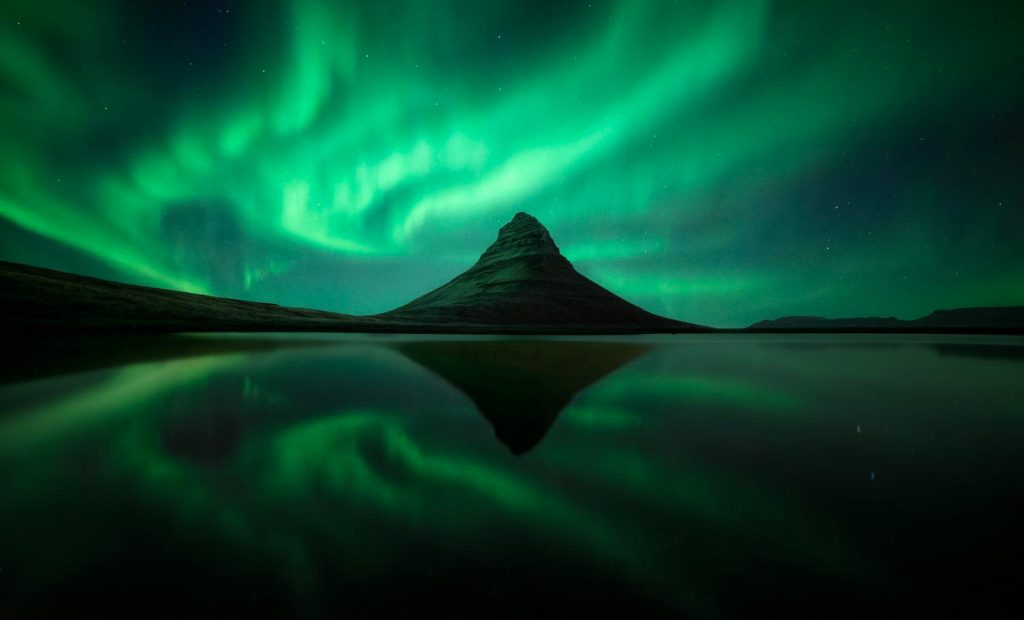
We start with one of the most iconic landscapes in Iceland: Kirkjufell, the distinctive mountain rising from the coast of the Snæfellsnes Peninsula in western Iceland.
In my opinion, the Snæfellsnes Peninsula is one of the most beautiful areas in the country, with an incredible variety of landscapes concentrated within a relatively small area. But Kirkjufell is undoubtedly its most recognizable landmark and one of the most photographed mountains in Iceland.
Personally, I am not usually a big fan of photographing from places that are already extremely famous and well known. However, I could not leave Kirkjufell out of this guide. It is not only one of the most beautiful places in Iceland, but also one of the best locations for photographing the Northern Lights.
What I particularly like about Kirkjufell is trying to create something different from the classic composition. Even though the mountain is instantly recognizable, the area around it offers so many possibilities that you can move away from the usual postcard photograph and create a much more personal image.
Composition Tips
One of the great advantages of photographing the Northern Lights at Kirkjufell is the number of different compositions you can create simply by moving around the area with your tripod.
There are several small ponds where you can photograph the reflection of Kirkjufell and, when the conditions are right, capture the Northern Lights reflected in the water as well. During the colder months, ice formations can add another interesting element to the foreground, including cracks in the ice and the rounded formations that landscape photographers sometimes call “dragon eggs”, created when sea ice breaks apart and is pushed against the rocks by the tide.
There are also several small streams flowing down from the surrounding mountains towards Kirkjufell. These can become excellent leading lines through the foreground. By placing the tripod very low and carefully positioning yourself along the flow of the water, you can use these lines to guide the eye towards Kirkjufell as the main subject.
With an open view towards the northern sky, the Aurora Borealis can then fill the background above the mountain, bringing together the foreground, the water, Kirkjufell and the Northern Lights.
Another possibility is to use Kirkjufellsfoss, the famous waterfall directly in front of the mountain, as the foreground. Moving just a few metres and changing your shooting position can completely alter the relationship between the waterfall, Kirkjufell and the sky.
This is one of those locations where it really pays to explore with your tripod. By walking around the area and looking for different foregrounds, shooting positions and angles, you can find a surprising number of possibilities around the same iconic mountain.
With a little creativity and careful scouting, you can create truly next-level Northern Lights photographs from a landscape that has been photographed countless times before.
2. Vestrahorn
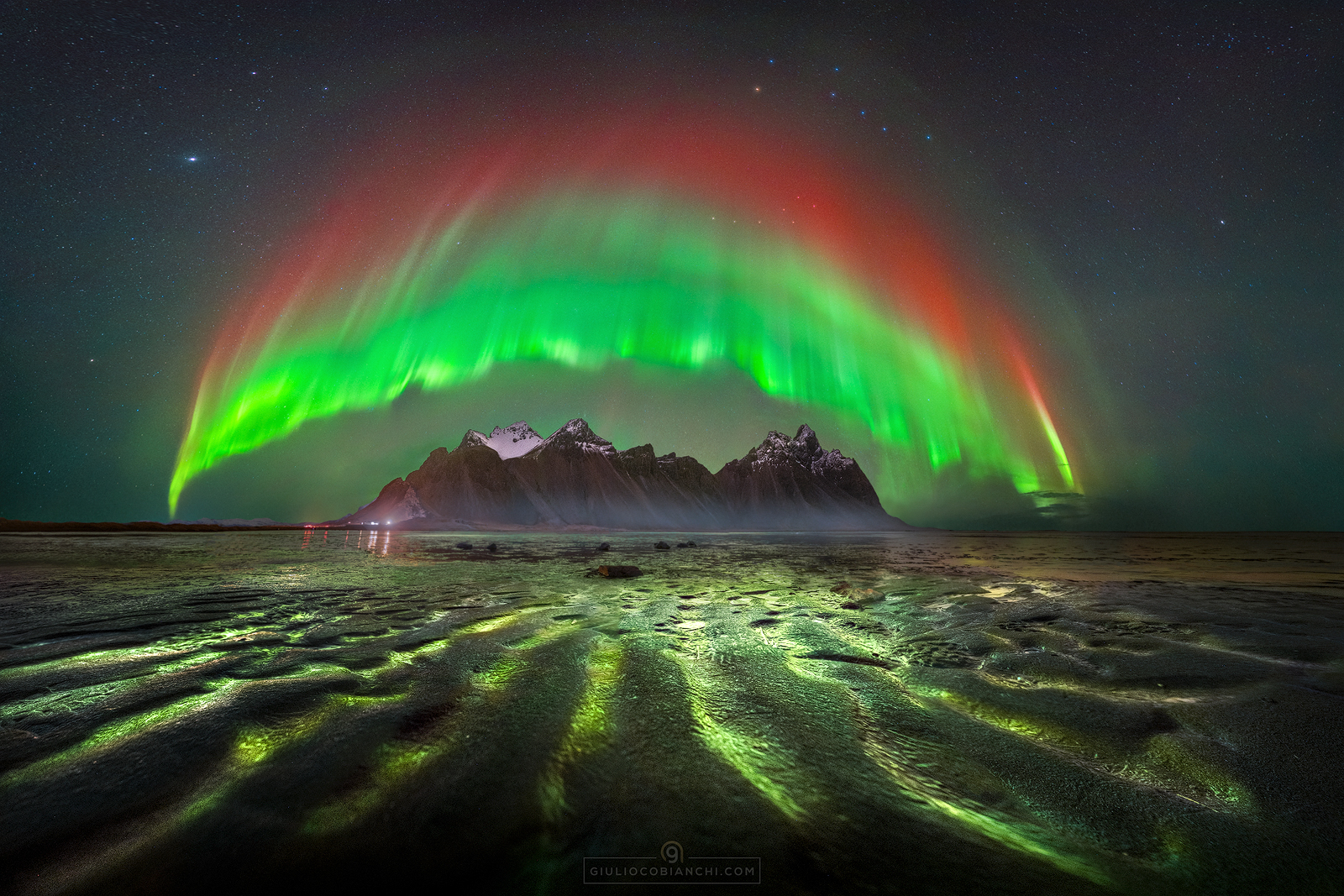
Located in South-East Iceland, Vestrahorn is certainly one of the wildest and most epic landscapes in the country.
It is not always easy to find clear skies above this mountain, but when the clouds finally disappear and the Northern Lights begin to dance above Vestrahorn, the experience is simply a dream come true.
The location can be reached directly by car, without any hiking, by paying a small fee to access the short private road leading to Stokksnes. Once you arrive, you find yourself surrounded by an enormous, wild landscape that makes you feel incredibly small. On the luckiest nights, this is a place where you can create truly spectacular Northern Lights photographs.
Composition Tips
There are several different ways to approach the composition at Stokksnes, and simply moving around the area can give you completely different photographs.
One option is to move towards the beach where the waves break along the shore. Here, you can use the movement of the water as a leading line, guiding the eye through the foreground towards Vestrahorn and the Northern Lights above the mountain.
Another possibility is to photograph from the beach where the sand remains wet after low tide and is often covered by a thin layer of ice during the colder months. The wet sand can create beautiful reflections of the Northern Lights, while the channels and lines left by the water become natural leading lines towards Vestrahorn.
The huge sand dunes covered with grass and orange-brown vegetation offer another completely different foreground. Their shapes and warm colours create a strong contrast with the cold tones of the night sky and can add much more colour and depth to your photographs.
You can also choose between very different compositions. With a panoramic composition, you can include the entire Vestrahorn mountain range, creating a vast landscape that emphasizes the scale of the location. Alternatively, you can concentrate on the sharp peaks on the right side of the mountain and create a vertical composition that gives much more prominence to Vestrahorn and the Aurora above it.
For this last type of composition, I particularly recommend shooting from the beach where the waves break. From there, you can use the movement of the water in the foreground to lead the eye towards the distinctive peaks of Vestrahorn, while the Northern Lights dance above the mountain.
3. Skógafoss Waterfall
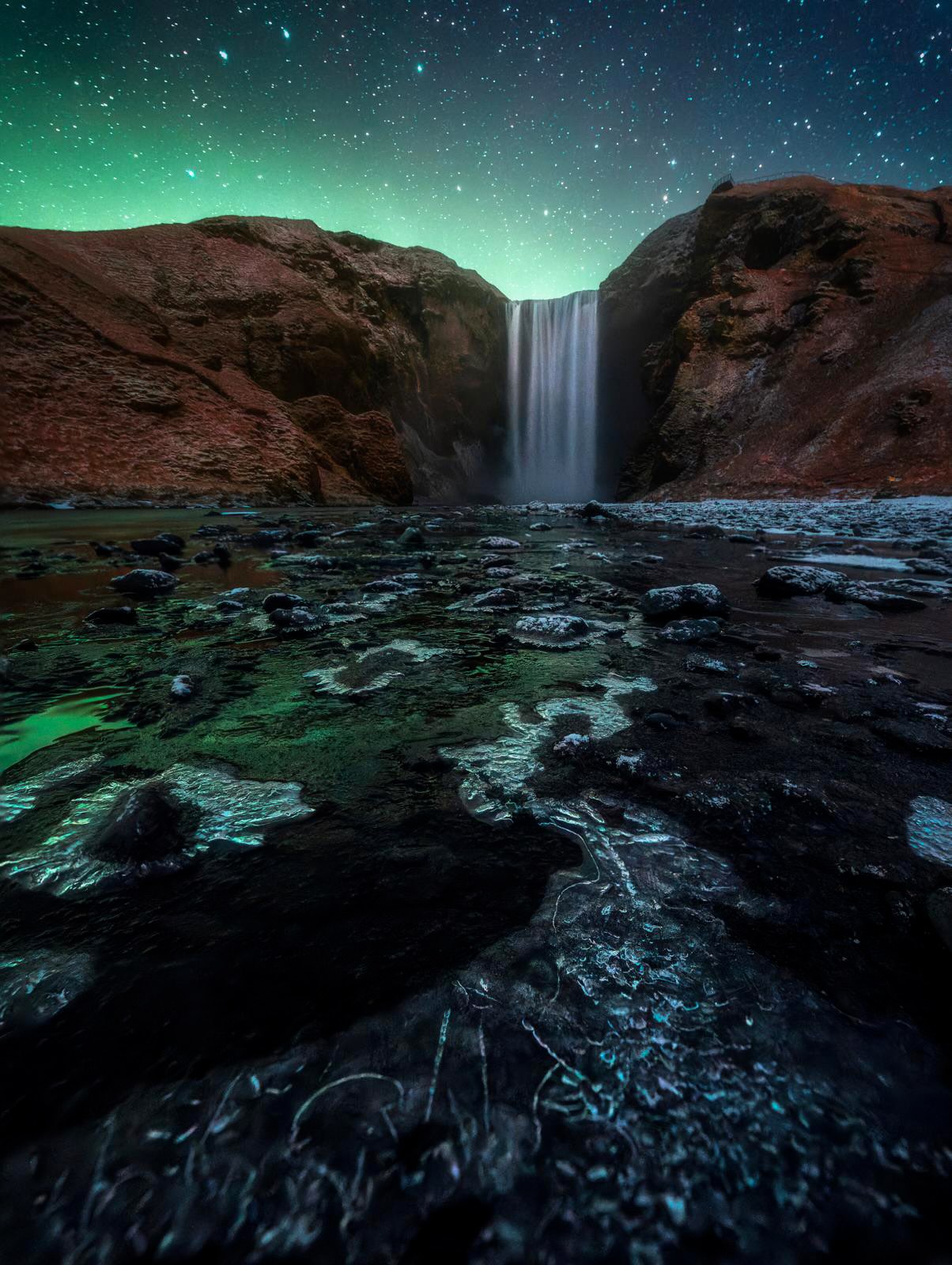
Skógafoss Waterfall is one of the most impressive waterfalls in Iceland and certainly one of the most photogenic. It is also one of the few famous waterfalls in the country that is still not artificially illuminated at night, making it a particularly interesting location for Northern Lights photography.
The waterfall is very easy to access. You can park right next to it and reach the main photography area within just a few minutes on foot.
Another great advantage for photographing the Northern Lights is the orientation of the waterfall. The northern sky is directly behind Skógafoss, making it relatively easy to capture the Aurora Borealis dancing directly above the waterfall when conditions are right.
Composition Tips
Unlike some of the other locations in this guide, Skógafoss does not offer a huge number of completely different compositions. However, there are still some interesting possibilities if you take the time to explore the area around the river.
With a wide-angle lens and your tripod positioned very low, I recommend walking along the river and looking for rocks where the water creates small cascades and rapids. Shooting from a low position makes these small waterfalls appear much larger in the foreground, while the flow of the water creates natural leading lines that guide the eye towards Skógafoss as the main subject.
With the Northern Lights dancing above the waterfall, you can combine the movement of the water in the foreground with the waterfall and the Aurora in the sky.
During the colder months, you can also look for interesting ice formations among the rocks along the river. Small pools of water can sometimes remain unfrozen, creating opportunities to capture reflections of the Aurora Borealis while surrounding ice formations add texture and depth to the foreground.
The area is relatively compact, but walking along the river with your tripod and looking carefully at the foreground can still reveal some interesting alternatives to the classic straight-on photograph of Skógafoss.
4. Eystrahorn
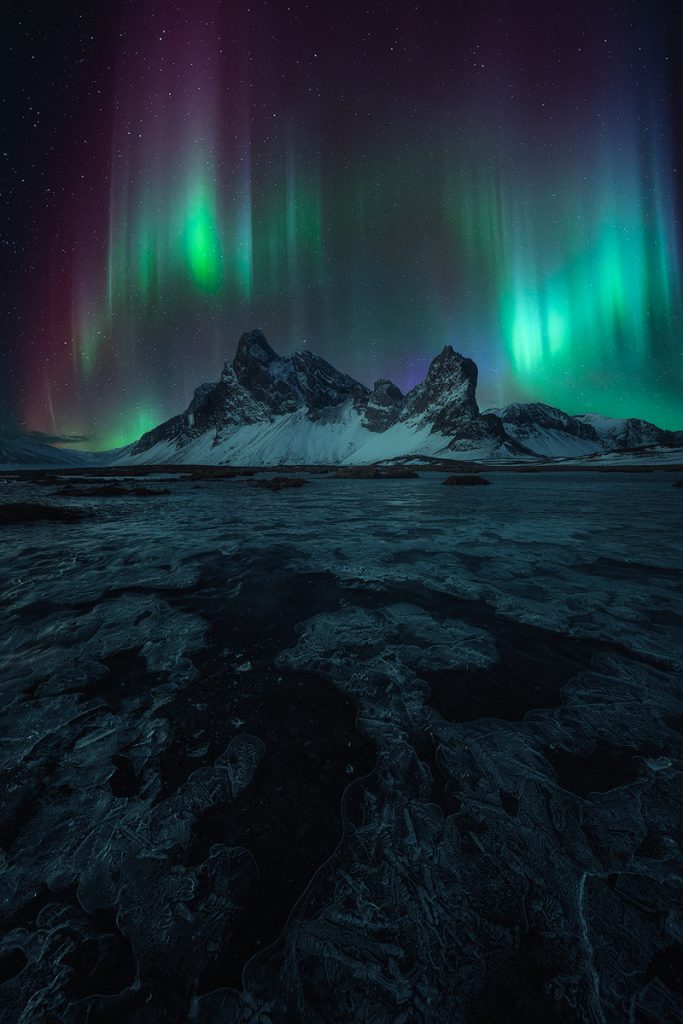
Located in South-East Iceland, near Hvalnes, Eystrahorn is a more remote and lesser-known location than many of the other places in this guide. It is also one of the most spectacular places to photograph the Northern Lights in Iceland.
The area around Eystrahorn gives you an even stronger feeling of being far away from civilization. The nearest town is Höfn, and once night falls, the almost complete darkness around the mountain creates fantastic conditions for photographing the Northern Lights dancing above its dramatic peaks.
You can park your car close to Hvalnes Lighthouse, right next to the best photography locations, so there is no need for a long hike. From the parking area, it only takes a few steps to reach some of the most interesting compositions.
Composition Tips
One of the main possibilities at Eystrahorn is a small lake in front of the mountain. Here, you can use the water to create beautiful reflections of the Northern Lights, with the rugged silhouette of Eystrahorn in the background and the lights dancing above it.
During the colder months, ice formations can also develop across the surface of the lake, creating an additional foreground element. The combination of ice, reflections, the dark mountain and the Northern Lights can produce very atmospheric photographs.
From this position, you can also create panoramic images that include the entire Eystrahorn landscape and the Northern Lights stretching across the sky above the mountain.
Another option is to walk towards the beach on the left-hand side of the mountain. From there, you can create more intimate vertical compositions, isolating the most imposing peaks of Krossanesfjall, the larger mountain massif surrounding Eystrahorn, and placing the Northern Lights directly above them.
This is a particularly effective way to emphasize the dramatic shape of the mountain while giving the Northern Lights plenty of space in the sky.
Eystrahorn’s remote atmosphere, dark skies and distinctive mountain shape make it a fantastic place to photograph the Northern Lights in Iceland.
5. Fjallsárlón, Skaftafellsjökull and Svínafellsjökull
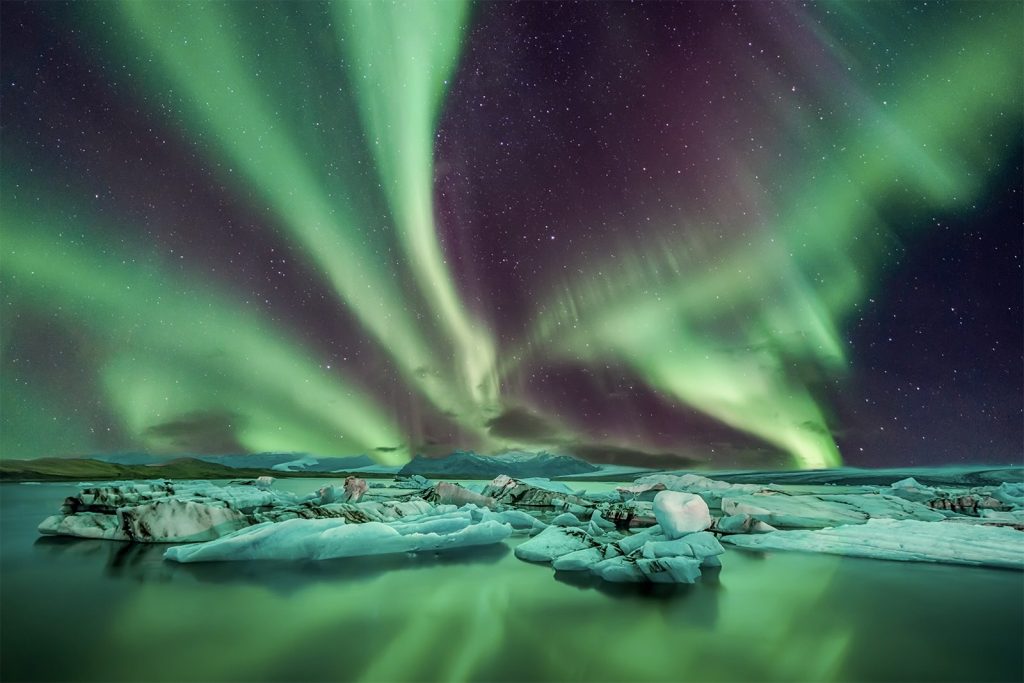
The glacial lagoons and ice-filled landscapes around Fjallsárlón, Skaftafellsjökull and Svínafellsjökull are among the most spectacular places to photograph the Northern Lights in Iceland.
Along the South Coast, glacial meltwater creates lagoons and pools filled with floating icebergs and constantly changing ice formations. It is a wild and almost primordial landscape, where enormous glaciers descend from the mountains and pieces of ice break away and accumulate along the water.
All three locations face north, making them particularly interesting for Northern Lights photography. From the shore, you can look directly towards the northern sky and photograph the lights dancing above the glaciers and the surrounding landscape.
The locations can be reached easily by car, and from the parking areas, short walks take you to the edge of the water and towards some of the most interesting ice formations.
But photographing the Northern Lights here is not only about the final image. Standing beside a glacial lagoon at night, surrounded by complete darkness and listening to the ice cracking in the cold, is an experience that is worth having even without a camera.
Composition Tips
During the colder months, some of these lagoons and water surfaces can become almost completely frozen, creating an incredible variety of ice formations that can be used as foregrounds. Cracks, patterns and different layers of ice can add texture to the foreground, while the enormous glacier rises in the background and the Northern Lights dance above it.
By placing the tripod low and getting close to the ice, you can create compositions that combine the detailed foreground with the huge scale of the glacier behind it and the Northern Lights in the sky.
Another possibility is to look for areas where the water remains open. These sections can create beautiful reflections of the Northern Lights, while floating icebergs add another element to the foreground. The combination of reflections, ice, mountains and the night sky can produce truly breathtaking photographs.
At Fjallsárlón, in particular, the floating icebergs constantly change position and shape, meaning that the foreground can look completely different from one night to the next. Around Skaftafellsjökull and Svínafellsjökull, the surrounding ice formations and the shape of the glacier offer different possibilities for creating more intimate compositions.
This is one of my favorite types of Northern Lights photography in Iceland: using the ice as the main foreground element and building the composition around its shapes, textures and reflections.
When the sky clears, the lights appear above the glacier and their reflections spread across the water or ice, creating magnificent photographs in one of Iceland’s most wild and atmospheric landscapes.
If you would like to photograph some of these incredible locations for yourself, take a look at our Iceland Photography Tours.
Conclusion
Iceland is one of my favorite countries for creating spectacular Northern Lights photographs.
Its vast, wild and almost primordial landscapes seem to perfectly complement the Aurora, creating an atmosphere that is difficult to find anywhere else. From volcanic mountains and black-sand beaches to powerful waterfalls and immense glaciers, the landscape itself becomes part of the experience and gives every Northern Lights photograph its own character.
For me, this is what makes photographing the Northern Lights in Iceland so special: the power of its landscapes combines perfectly with the Northern Lights, creating magnificent compositions and unforgettable nights.

